Bukhara · When to go
Bukhara weather by month
Average temperatures and rainfall in Bukhara month by month, what each season feels like in this desert city, what to pack and the best time to visit.
Bukhara has a dry desert climate: very hot summers (July highs around 36–37 °C), cold winters (highs around 7–8 °C, frosty nights) and little rain, most of it from December to April. The best months to visit are April–May and September–October. Summer is manageable with early starts and a midday rest.
Bukhara climate at a glance
Bukhara lies at only about 220 metres above sea level, in the lower Zarafshan valley on the edge of the Kyzylkum desert. It is lower and drier than Samarkand, so summers are hotter and rain is rarer. The air is very dry: the heat feels less heavy than in humid climates, but the sun is intense, dust can blow in from the desert, and temperatures drop sharply at night.
The table gives approximate long-term averages. Individual years vary, and summer heatwaves can bring 40 °C or more.
| Month | Avg high (°C) | Avg low (°C) | Rain | What it feels like |
|---|---|---|---|---|
| January | 7 | −3 | low | Cold, clear or grey, frosty nights |
| February | 10 | −1 | low | Cold, first mild days |
| March | 16 | 5 | moderate | Changeable, Navruz on 21 March |
| April | 24 | 11 | moderate | Warm, green, blossom |
| May | 30 | 16 | low | Warm to hot, long bright days |
| June | 35 | 20 | almost none | Hot and dry |
| July | 36–37 | 22 | none | Hottest month, desert heat |
| August | 35 | 19 | none | Hot, fruit and melons |
| September | 29–30 | 13 | almost none | Warm, golden, harvest |
| October | 22 | 7 | low | Mild days, cool nights |
| November | 14 | 2 | low | Cool, quiet, clear |
| December | 8 | −1 | low | Cold, few visitors |
Spring (March–May)
Spring is one of the two best seasons in Bukhara. In March the weather is changeable, with some rain and cool days, but the festival of Navruz on 21 March brings music, food and families in festive dress to the squares. April is perhaps the loveliest month: comfortable temperatures, green trees around the pools and blossom in the courtyards. By May it is already hot in the afternoon, but mornings and evenings are perfect for walking. Bring layers and a light jacket for the evenings.
Summer (June–August)
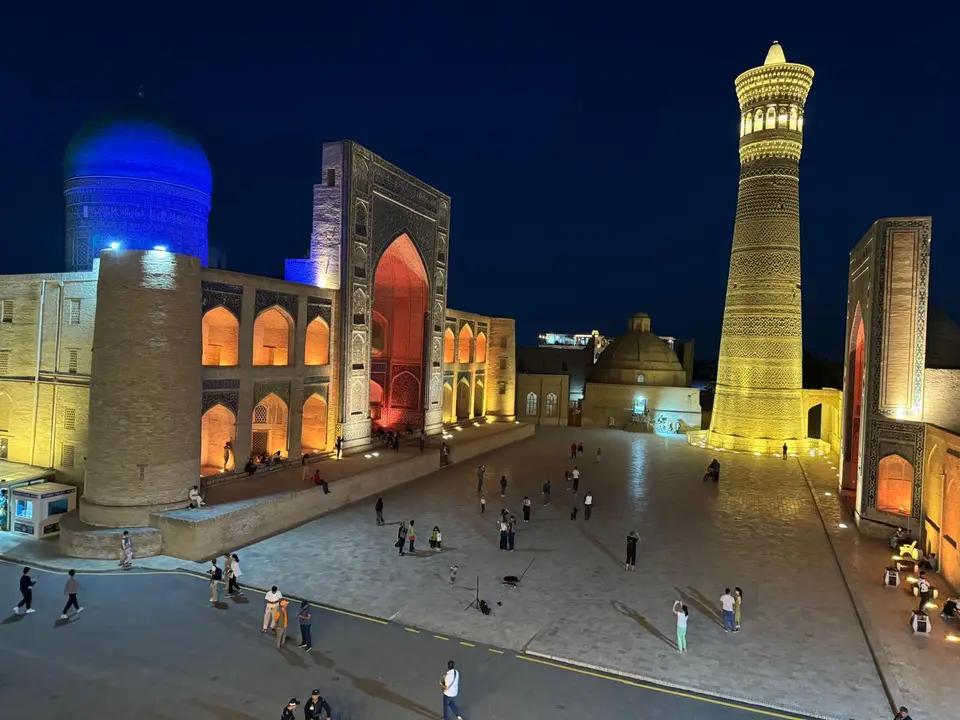
Summer in Bukhara is hot and completely dry, with afternoon temperatures regularly above 35 °C. The old city has little shade outside the trading domes and the trees of Lyabi-Hauz. Still, it is possible to travel in summer if you adapt: start at sunrise, visit indoor sights and museums in late morning, rest from about noon to four, and go out again in the late afternoon and evening, when the brick glows gold and the squares fill with life. Evenings at Lyabi-Hauz are pleasant even in July. Wear a hat and loose, light clothing that covers shoulders and knees, use sunscreen and drink plenty of water. Summer prices for accommodation are often lower.
Autumn (September–November)
September and October are ideal: warm, dry days, cool nights and a soft golden light that suits the brick monuments. Markets are full of melons, grapes and pomegranates. It is also the busiest tourist season, so book trains and accommodation early. November is cooler and quieter, often with clear skies, and makes a good choice for travellers who prefer fewer crowds.
Winter (December–February)
Winters are cold but usually dry and often sunny. Daytime temperatures are typically around 5–10 °C, but nights fall below freezing, and occasional cold spells bring snow, which turns the domes and minarets into a magical sight. Few tourists come, so the monuments are quiet and accommodation is cheaper. Some traditional guesthouses are cold, so ask about heating when booking, and pack a warm coat, hat and gloves.
Best time to visit
- Best overall: mid-April to May and September to mid-October.
- For festivals: around 21 March for Navruz. Bukhara has also hosted crafts and music festivals in spring and autumn; check dates locally.
- For low prices and few crowds: November to February, if you do not mind the cold.
- Hardest: July and early August, unless you plan around the heat.
Combining Bukhara with Samarkand and Khiva? Khiva is similar to Bukhara in climate, while Samarkand, being higher, is slightly cooler. See Samarkand weather and what to do in Bukhara.
What to pack
Comfortable walking shoes for uneven paving and dusty lanes; a hat, sunglasses and sunscreen in all seasons except winter; a light scarf for women for religious sites (also useful against dust); layers for cool evenings in spring and autumn; and a warm jacket from November to March. A refillable water bottle is useful year-round.
Frequently asked questions
What is the best month to visit Bukhara?
April, May, September and October offer the best weather, with warm days and cool evenings.
How hot is Bukhara in summer?
Very hot. July afternoons average around 36–37 °C and can exceed 40 °C, though the air is dry and nights are cooler.
Does it snow in Bukhara?
Occasionally in winter, but snow rarely lasts. Winters are mostly dry, cold and sunny.
Rules, timetables and prices change. We check this page regularly, but always confirm entry requirements with official sources before you travel.