Samarkand · Sights
Abdi Darun shrine
A neighbourhood shrine around a Timurid mausoleum, with a pool, centuries-old plane trees and a mosque, where local life continues as it has for centuries.
Abdi Darun is a small shrine complex in the south-east of Samarkand, around the grave of a 9th-century Arab judge known as Abd al-Darun (“Abdi inside”, as his grave was inside the old city walls). A 15th-century Timurid mausoleum, a 19th-century mosque and madrasah, a pool and huge old plane trees make it one of the most peaceful places in the city. Allow 20–30 minutes.
The judge inside the walls
According to tradition, the man buried here was a qadi (Islamic judge) who came to Samarkand with the early Arab armies in the 9th century and became known for his justice and piety. His name is remembered as Abd, and the epithet Darun, “inside”, distinguished his grave, inside the medieval city wall, from that of another holy man, Abdi Birun (“Abdi outside”), buried outside it. Both shrines became places of pilgrimage.
In the time of Ulugbek, in the first half of the 15th century, a domed mausoleum was built over the grave. Over the following centuries the shrine grew into a neighbourhood ensemble, with a mosque, a small madrasah and a pool for ablutions.
What you see
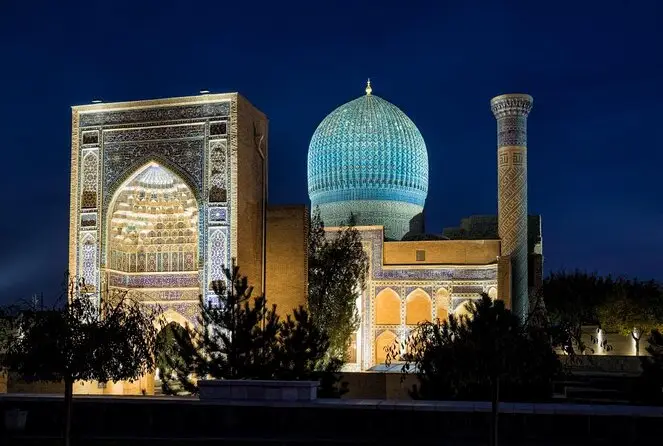
The heart of the complex is the mausoleum, a brick building with a tiled portal and a dome, typical of the Timurid period. Beside it, a mosque with a deep porch (aivan) on carved wooden columns and a small madrasah were built in the 19th century. In front of them lies a rectangular pool (hauz) surrounded by enormous old plane trees (chinar), some of which are said to be several hundred years old.
The combination of water, shade and old buildings is typical of the traditional Central Asian mahalla (neighbourhood) shrine. Elderly men sit on benches by the pool, children play, and people come to pray at the grave or simply to rest.
A living neighbourhood shrine
Unlike the major monuments, Abdi Darun is not a museum. It belongs to its neighbourhood and is used every day. On Fridays the mosque fills for prayers, and during religious holidays families come with food to share. Visitors are welcome but should be discreet: it is a place for quiet reflection rather than sightseeing. The atmosphere, slow and friendly, gives a glimpse of everyday Samarkand that most tours miss.
Visiting
Abdi Darun is in the old residential quarter in the south-east of the city, a few minutes’ walk from the Ishratkhona mausoleum and about 15 minutes by taxi from the Registan. There is usually no ticket. Dress modestly: cover shoulders and knees, and women may want to cover their hair near the mausoleum and mosque. Remove shoes if you enter the mosque, avoid prayer times and ask before photographing people.
Late afternoon is a lovely time to visit, when the light filters through the plane trees and the neighbourhood comes out to the pool. Combine it with Ishratkhona for an hour-long walk in a part of Samarkand few tourists see.
Plane trees and pools
Old shrines in Uzbekistan are often marked by giant plane trees and pools. The trees were planted for shade and as symbols of long life and blessing, and many are believed to have healing powers; you may see pieces of cloth tied to branches as signs of wishes and prayers. The pools, fed by canals, provided water for ablutions and kept the courtyards cool in summer. Together they create the classic image of the Central Asian mazar, the sacred garden around a tomb.
Nearby
The ruined Ishratkhona mausoleum is five minutes away on foot. The Khoja Akhrar complex lies a short taxi ride to the south-west, and Gur-Emir and the Registan about 15 minutes by taxi to the west. If you are hungry, ask your guide or driver for a local teahouse in the neighbourhood, where plov and tea are served without any tourist fuss.
Frequently asked questions
What does Abdi Darun mean?
Roughly “Abdi inside”, because the grave was inside the old city walls, unlike that of Abdi Birun (“Abdi outside”).
Is there a ticket for Abdi Darun?
Usually not. It is an active neighbourhood shrine; donations are welcome.
Is Abdi Darun worth visiting?
Yes, if you want a quiet, authentic place away from the crowds. Combine it with the nearby Ishratkhona mausoleum.
Rules, timetables and prices change. We check this page regularly, but always confirm entry requirements with official sources before you travel.