Samarkand · Sights
Ak-Saray Mausoleum behind Gur-Emir
A small 15th-century Timurid tomb behind Gur-Emir with one of the finest painted interiors in Samarkand.
Ak-Saray (“white palace”) is a small Timurid mausoleum of the 1470s, standing a short walk south-east of Gur-Emir in Samarkand. Its plain exterior hides a cross-shaped chamber with a richly painted and gilded interior, restored in the early 21st century. Most tourists miss it, so it is usually quiet. A visit takes 20 minutes.
History
Ak-Saray was built around 1470 during the reign of the later Timurid ruler Abu Said, when Samarkand was still the dynasty’s capital. Who was buried here is uncertain. Some historians link it to the Timurid prince Abd al-Latif, Ulugbek’s son, who ordered his father’s death in 1449 and was himself killed a few months later; others believe it was a family tomb for younger members of the dynasty. Excavations in the 20th century found several burials in the crypt.
Its name, “white palace”, has nothing to do with its function. It may come from a building that once stood nearby or from the pale colour of the walls before restoration.
The interior
From the outside, Ak-Saray is a modest brick building whose dome was never completed or did not survive. Inside, it is a different world. The central chamber is cross-shaped, and its walls and vaults were covered in the kundal technique: patterns raised in relief, then painted in deep blue, red and green and highlighted with gold. Medallions, floral scrolls and geometric stars fill every surface.
For centuries the decoration was hidden under soot and plaster and badly damaged by water. Restoration in the early 2000s cleaned and consolidated the original painting and recreated missing areas, making it one of the best places in Samarkand to see the Timurid painted interior at close range, without the crowds of Gur-Emir.
Architecture
The building is an example of a late Timurid mausoleum plan, with a central domed space and four shallow arms forming a cross. Builders of this period experimented with complex vaults, using intersecting arches to carry the dome and create the illusion of height. Architectural historians value Ak-Saray as a link between the great early-15th-century buildings such as Gur-Emir and the 16th-century monuments of Bukhara.
Visiting
Ak-Saray is in the quiet residential area behind Gur-Emir, about five minutes on foot. It is not always open; opening times and ticket arrangements change, and sometimes the key is held by a caretaker. Ask at the Gur-Emir ticket office or let your guide arrange access. Photography inside may be restricted to protect the paintings.
Combine it with Gur-Emir and Rukhabad as one short walk. Because few visitors come here, it is a good place to see Samarkand’s Timurid heritage in silence.
The later Timurids in Samarkand
Ak-Saray belongs to a period that is often forgotten. After Ulugbek’s death in 1449, the Timurid empire fragmented. Rulers such as Abu Said kept Samarkand as their capital for a few more decades, but their resources were smaller and their buildings more modest than those of Timur and Ulugbek. Instead of colossal portals, they invested in refined interiors, delicate painting and complex vaulting.
By the early 16th century the Uzbek Shaybanids had taken Samarkand, and the political centre moved to Bukhara. Ak-Saray is therefore one of the last Timurid buildings in the city, a quiet postscript to a great age. Visiting it after Gur-Emir lets you compare the grand public face of the dynasty with the intimate, private art of its final decades, when painters and craftsmen were still among the best in the Islamic world.
If the building is closed, the exterior and its setting in a residential street are still worth the short walk from Gur-Emir. You will see everyday Samarkand life, children playing and neighbours chatting, a few steps from one of the city’s most famous monuments.
Nearby
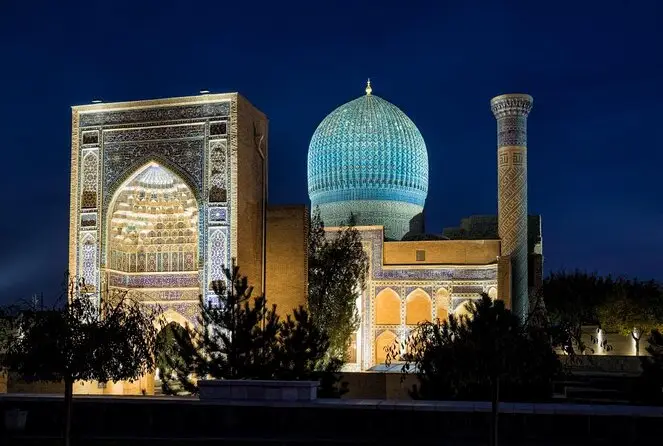
Gur-Emir is five minutes away on foot, and from there a landscaped pedestrian path leads past the Rukhabad mausoleum to the Registan in about ten minutes. The statue of Timur and the Amir Timur park are a short walk east of Gur-Emir. For lunch, the streets around Gur-Emir have teahouses serving plov and shashlik, and several family guesthouses in the old quarter offer a quiet place to stay within walking distance of all three monuments. In the evening, walk back past the illuminated dome of Gur-Emir, one of the best night views in Samarkand.
Frequently asked questions
Who is buried in Ak-Saray?
It is not known for certain. It is a late Timurid tomb of around 1470; some historians link it to Ulugbek’s son Abd al-Latif, others to younger members of the dynasty.
Is Ak-Saray worth visiting?
Yes, for its restored painted and gilded interior, one of the finest in Samarkand, and for the quiet compared with Gur-Emir. Check that it is open before you go.
Where is Ak-Saray?
About five minutes’ walk behind (south-east of) the Gur-Emir mausoleum.
Rules, timetables and prices change. We check this page regularly, but always confirm entry requirements with official sources before you travel.