Khiva · Sights
Dishan-Kala: Khiva’s outer town
Dishan-Kala, the outer town of Khiva around Ichan-Kala, its 19th-century walls and gates, the Nurullaboy palace, the bazaar and everyday life beyond the museum city.
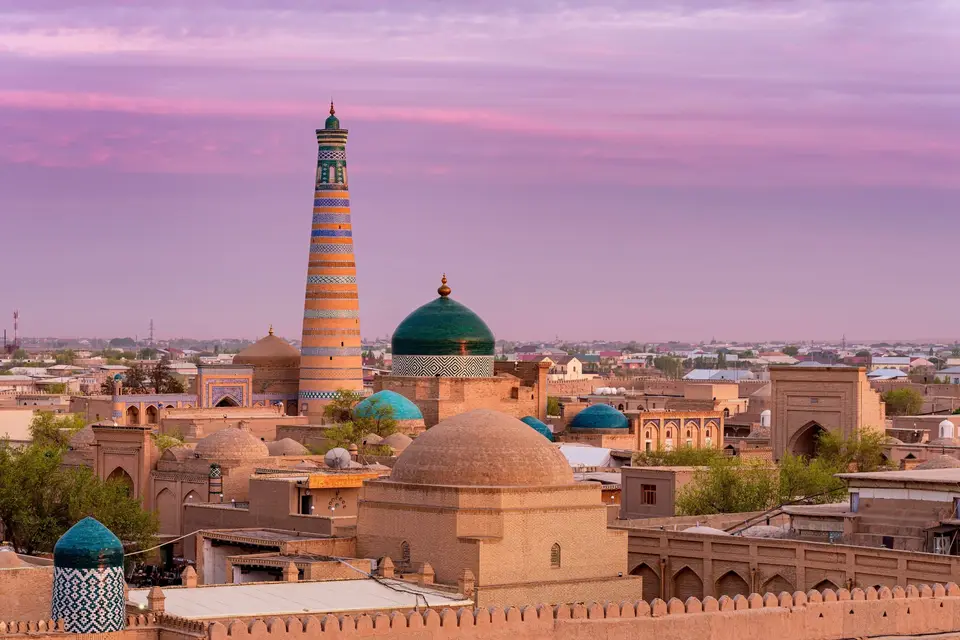
Dishan-Kala is the outer town of Khiva that grew around the walled inner city of Ichan-Kala. It was enclosed in 1842 by an outer wall about 6 km long with ten gates, built by Allakuli Khan. Today it is where Khivans live and shop. Visit the Nurullaboy palace, the bazaar, surviving gates and the residential lanes.
The inner and outer town
Central Asian cities were traditionally divided into a fortified inner town and an outer town where most of the population lived. In Khiva, the inner town is Ichan-Kala, with the khan’s palaces, the main mosques, madrasahs and the houses of the elite; the outer town is Dishan-Kala, with the homes of craftsmen, farmers and merchants, the bazaar, gardens and smaller mosques.
As Khiva grew in the early 19th century, Turkmen raids threatened the unprotected outer town. In 1842 Allakuli Khan ordered a new outer wall built around it. According to tradition, every adult man of the khanate had to work on it for a set number of days, and it was completed in a remarkably short time. The wall was about 6 km long, with ten gates leading to the roads to Urgench, Hazarasp, the desert and the fields. Much of it has since disappeared, but sections and some gates survive.
Gates of the outer wall
Among the surviving gates, the most notable is the Kosh Darvaza (“double gate”), on the north side of the city on the road to Urgench. It was rebuilt in the early 20th century with two arched passages flanked by towers decorated with glazed bricks. It is an impressive sight on the way into town. Other gates and stretches of wall can be found by walking along the edge of the old outer town. They are not restored like the walls of Ichan-Kala, which makes them more evocative.
What to see
- The Nurullaboy palace, the last residence of the khans, where Khivan craftsmanship meets Russian imperial taste.
- The bazaar, just outside the eastern gate of Ichan-Kala, the commercial heart of Khiva: bread, fruit, vegetables, dried fruit, spices, fur hats and household goods. Go in the morning.
- Neighbourhood mosques and madrasahs: Dishan-Kala has many smaller religious buildings of the 19th and early 20th centuries, often with fine carved wooden columns and doors, still used by local communities.
- The residential mahallas: lanes of mud-brick houses with courtyards, gardens and vineyards, where you can see how Khivans live today.
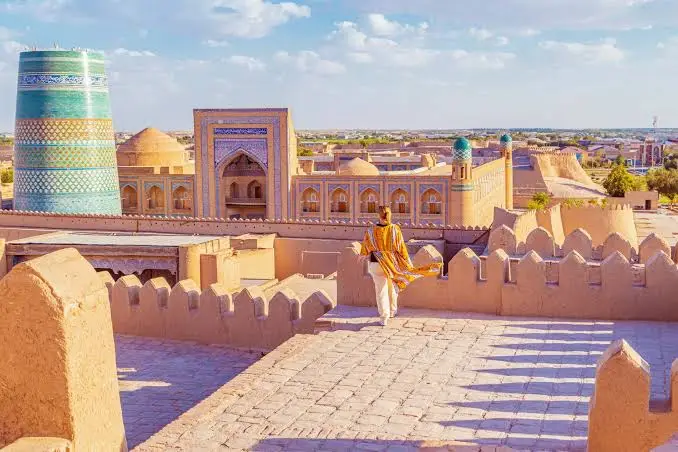
- The outside of the Ichan-Kala walls: a walk around the inner walls from Dishan-Kala shows their massive scale.
Everyday Khiva
Ichan-Kala has been carefully restored as an open-air museum, and most of its houses are now guesthouses, shops and workshops. Dishan-Kala, by contrast, is a living town. Walking here, you will see children walking to school, women baking bread in the tandir, old men on benches outside the mosque, and the rhythm of a provincial Uzbek town. It is a valuable balance to the museum city inside the walls, and a chance to meet local people away from the souvenir stalls.
Many of the guesthouses in Khiva are located just outside the walls in Dishan-Kala, often cheaper and quieter than those inside; see where to stay in Khiva.
Visiting
Getting around: most of Dishan-Kala is within 20–30 minutes’ walk of Ichan-Kala; taxis are cheap for longer distances.
Tickets: walking in Dishan-Kala is free; the Nurullaboy palace has its own entrance fee.
Time needed: 1–2 hours for a walk including the bazaar and the palace.
Tips: go in the morning for the bazaar or late afternoon for the light on the walls. Dress modestly in residential areas, and ask before photographing people. Combine with the gates of Khiva and the Allakuli Khan madrasah by the eastern gate. See our Khiva itinerary and Khiva food.
Frequently asked questions
What is the difference between Ichan-Kala and Dishan-Kala?
Ichan-Kala is the walled inner city with the main monuments; Dishan-Kala is the outer town around it, where most people live, enclosed by a second wall in 1842.
What is there to see in Dishan-Kala?
The Nurullaboy palace, the bazaar, surviving gates of the outer wall such as Kosh Darvaza, neighbourhood mosques and everyday life.
Is it worth staying in Dishan-Kala?
Yes, if you want quieter and often cheaper guesthouses within walking distance of the monuments.
Rules, timetables and prices change. We check this page regularly, but always confirm entry requirements with official sources before you travel.