Khiva · Sights
Pahlavan Mahmud Mausoleum, Khiva
The mausoleum of Pahlavan Mahmud, poet, wrestler and patron saint of Khiva, its tiled interior, the tombs of the khans, the holy well and the customs of pilgrims.
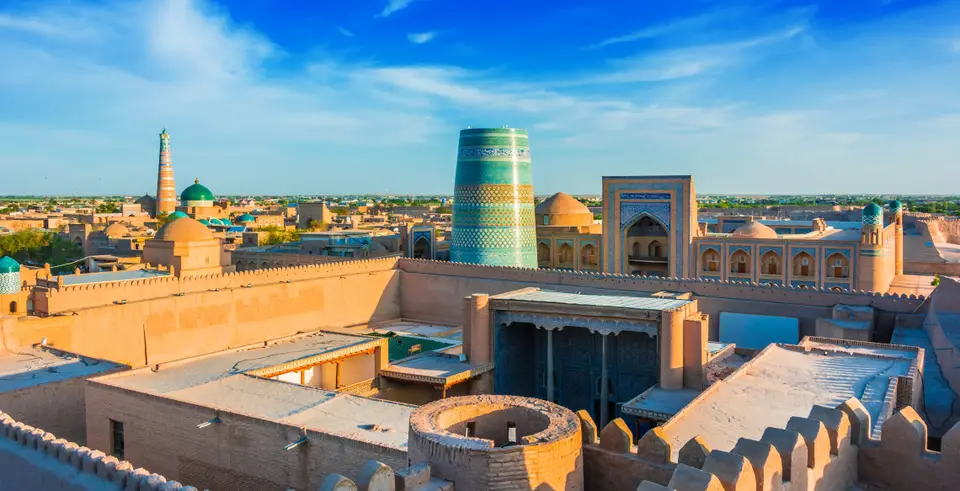
The Pahlavan Mahmud mausoleum is Khiva’s holiest shrine, the tomb of Pahlavan Mahmud (died 1326), poet, champion wrestler and patron saint of the city. Rebuilt in the early 19th century, it has the largest turquoise dome in Khiva and an interior covered in exquisite blue tiles. Several khans are buried here too. Dress modestly; allow 20–30 minutes.
Pahlavan Mahmud
Pahlavan Mahmud lived in Khiva in the late 13th and early 14th centuries. Pahlavan means “champion” or “hero”: he was famous as an invincible wrestler, and legends say he defeated champions as far away as India. He was also a furrier by trade, a poet who wrote quatrains (rubai) in Persian on love, humility and the meaning of life, and a Sufi known for his wisdom and generosity.
One favourite story tells how, in India, he was to wrestle the ruler’s champion to win the freedom of Khivan captives. Before the bout he saw the champion’s mother praying for her son’s victory. Moved, Pahlavan Mahmud let himself lose, but the ruler, learning the reason, freed the prisoners anyway.
After his death he was buried near his workshop, and his grave became a place of pilgrimage. He came to be regarded as the patron saint of Khiva and of wrestlers, and the khans chose to be buried beside him.
The mausoleum
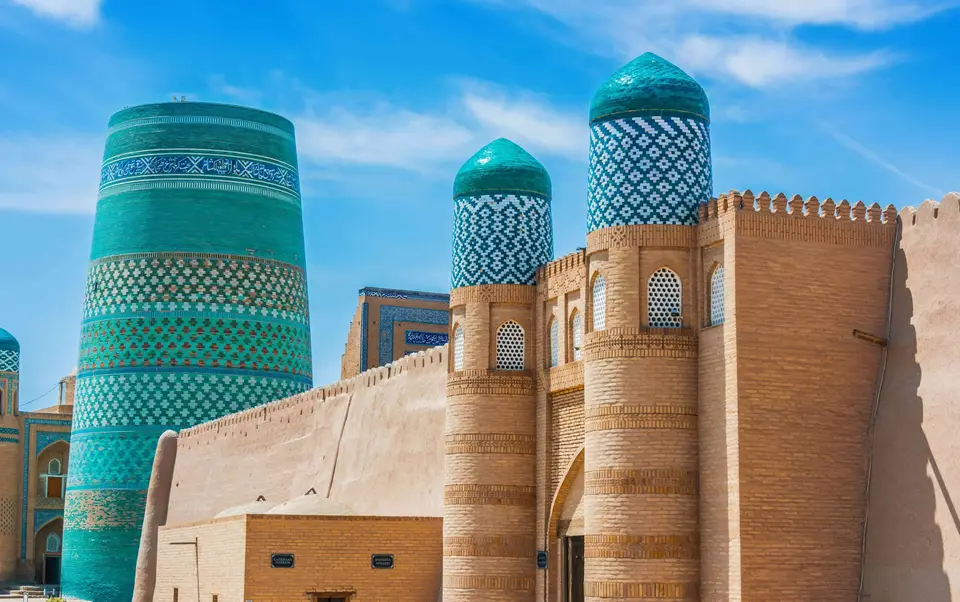
The present complex was built mainly in 1810–1835, under the khans Muhammad Rahim Khan I and Allakuli Khan, replacing earlier buildings over the tomb. A gate and a small courtyard lead to the main building with a high portal and the largest dome in Khiva, covered in turquoise tiles and crowned with a gilded finial.
Inside, the burial chamber is one of the most beautiful rooms in Central Asia. Its walls and the inner dome are covered in majolica tiles in deep blue, white and turquoise, with dense floral patterns and calligraphy. Among the inscriptions are verses by Pahlavan Mahmud himself. The tomb of the saint lies behind a carved wooden screen in a side chamber.
The main hall also holds the tombs of Muhammad Rahim Khan I and other members of the ruling Kungrad dynasty. Other khans, including Isfandiyar Khan, are buried in adjacent rooms and courtyards. The carved wooden doors of the complex are masterpieces of Khivan woodcarving.
The holy well and pilgrim customs
In the courtyard is a well whose water is believed to bring strength and blessings. Men drink it hoping for strength and vitality, and women hoping for children. Pilgrims also throw coins into a fountain, tie ribbons and pray at the tomb. On weekends and holidays the courtyard fills with families and newly married couples, who come to ask the saint’s blessing; it is moving to watch, but be discreet with your camera. The shrine is also where many Khivans come before an important event in their lives, such as an exam, a journey or a wrestling match.
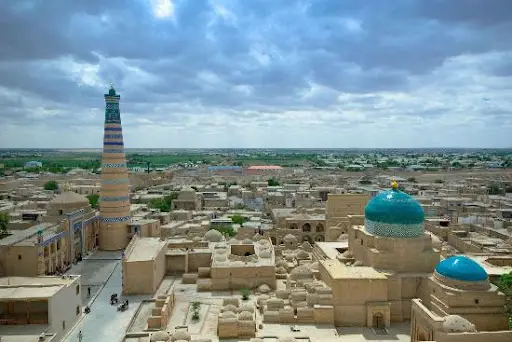
Behind the mausoleum is an old cemetery, and next to it the Islam Khoja minaret.
Etiquette
This is an active shrine. Dress modestly: shoulders and knees covered, a headscarf for women. Remove your shoes if asked, speak quietly, and do not walk in front of people praying. Photography may be restricted inside the tomb chamber or allowed for a fee; ask the attendant. Many visitors make a small donation, which helps maintain the shrine.
Visiting
Location: in the south of Ichan-Kala, next to the Islam Khoja minaret.
Tickets: usually included in the Ichan-Kala combined ticket or with a small separate fee; donations welcome.
Time needed: 20–30 minutes.
Best time: morning, when the light enters the courtyard and the shrine is calm; weekends for the atmosphere of pilgrims and wedding parties.
Nearby: the Juma mosque, the Tash-Hauli palace and the Kunya Ark, all within a few minutes’ walk. See our Khiva itinerary.
Frequently asked questions
Who was Pahlavan Mahmud?
A 13th–14th-century wrestler, poet and furrier from Khiva, revered as the city’s patron saint.
Who is buried in the Pahlavan Mahmud mausoleum?
Pahlavan Mahmud himself, and khans of Khiva including Muhammad Rahim Khan I and Isfandiyar Khan, with other members of the dynasty.
Can tourists enter the mausoleum?
Yes, dressed modestly and respecting the pilgrims. Photography rules inside vary.
Rules, timetables and prices change. We check this page regularly, but always confirm entry requirements with official sources before you travel.