Bukhara · Sights
Khoja Gaukushon ensemble, Bukhara: history and visitor guide
Khoja Gaukushon in Bukhara: what it is, its history and name, the madrasah, mosque and minaret, tickets and opening, how to get there, whether it is worth visiting and what to see nearby.
Khoja Gaukushon is a 16th-century ensemble in the southern part of Bukhara’s old town: a large madrasah, a Friday mosque, a slender minaret and a pool around a quiet square, about 5 minutes’ walk from Lyabi-Hauz. The name means “killer of bulls”, because the site was once a cattle slaughterhouse. Entry to the square is free.
What is Khoja Gaukushon?
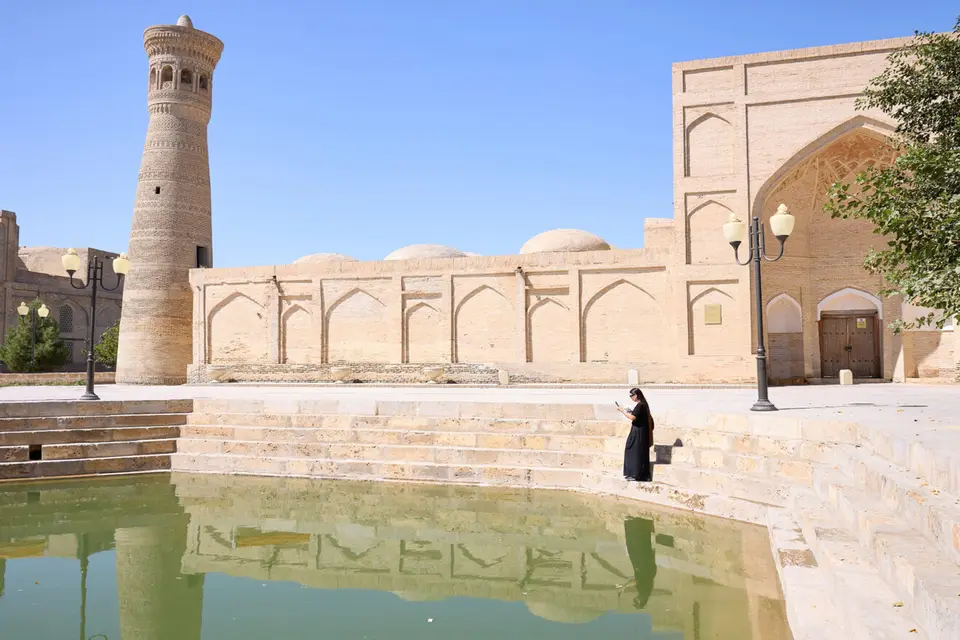
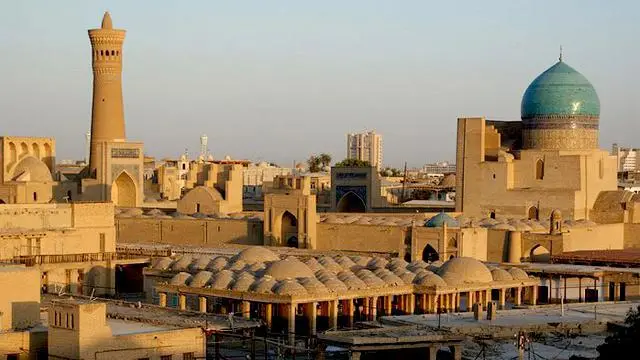
Khoja Gaukushon is one of the neighbourhood ensembles of old Bukhara: a group of religious buildings around a square with a pool (hauz). It includes a madrasah (Islamic college), a Friday mosque and a minaret, the second most visible minaret in the old town after the Kalyan minaret. It lies just off the main tourist route between Lyabi-Hauz and the trading domes, and the square is usually quiet.
What does Gaukushon mean?
Gau-kushon means “bull killers”. Before the ensemble was built, this part of Bukhara had a slaughterhouse where bulls were killed for the city’s markets, and the name stayed with the place even after mosques and a madrasah replaced it. Khoja is an honorific title used for descendants of religious families and sheikhs.
History of Khoja Gaukushon
The ensemble dates from the second half of the 16th century, under the Shaybanid dynasty, which rebuilt much of Bukhara: the trading domes, the Mir-i-Arab madrasah and the Kukeldash madrasah belong to the same building boom. The madrasah is usually dated to around 1570 and is associated with Khoja Kalon (Khoja Saad) of the Juybari family, the richest and most influential sheikhs of Shaybanid Bukhara, whose family necropolis is at Chor-Bakr.
What to see at Khoja Gaukushon
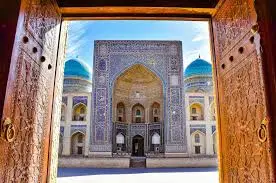
- The madrasah: its courtyard is not rectangular but a trapezoid, because the builders had to fit it between existing streets. Two storeys of student cells surround it; today many are used by craftsmen and souvenir sellers.
- The Friday mosque: a wide portal and a domed prayer hall on the other side of the square.
- The minaret: a brick tower with bands of decorative brickwork and a small lantern at the top; visitors often notice that it leans slightly.
- The pool: one of the few surviving neighbourhood hauz; most of Bukhara’s old pools were filled in during the 20th century.
Khoja Gaukushon tickets and opening hours
The square and the outside of the buildings can be seen at any time and free of charge. The madrasah courtyard is normally open when the craft shops are open, roughly from morning to early evening; the mosque is a working place of worship, so visit outside prayer times and dress modestly. Check on site, as hours change with the season.
How to get to Khoja Gaukushon
From Lyabi-Hauz, walk south-west through the lanes for about 5 minutes; from the trading domes, about 5–7 minutes south. Taxis can drop you on the nearest street, but the old town is best explored on foot. If you are arriving in the city, see how to get to Bukhara.
Best time to visit
Come in the late afternoon or evening, when the minaret is lit and local families gather on the square. Morning light is good for photographs of the mosque portal. In summer avoid the midday heat.
How long do you need at Khoja Gaukushon?
Allow 15–30 minutes: a walk around the square, a look into the madrasah courtyard and its craft workshops, and photographs of the minaret. Stay longer in the evening, when the square becomes a meeting place for the neighbourhood.
Is Khoja Gaukushon worth visiting?
Yes, if you have a full day or more in Bukhara. It is not a headline monument like Poi Kalyan, but it shows how an old Bukhara neighbourhood was organised, with its own mosque, madrasah, pool and minaret, and it is almost always peaceful. Because it is so close to Lyabi-Hauz, it costs only 15–30 minutes.
What to see near Khoja Gaukushon
- Lyabi-Hauz and the Nadir Divan-Begi madrasah, 5 minutes away;
- the Jewish quarter with its old synagogue;
- the trading domes and the Magoki-Attori mosque;
- Poi Kalyan, about 10 minutes north.
See our Bukhara itinerary and things to do in Bukhara.
Frequently asked questions
What does Gaukushon mean?
“Killer of bulls”. The site was a cattle slaughterhouse before the ensemble was built in the 16th century.
When was the Khoja Gaukushon madrasah built?
Around 1570, under the Shaybanid dynasty, associated with Khoja Kalon of the Juybari sheikhs.
Is there an entrance fee for Khoja Gaukushon?
No. The square is free, and the madrasah courtyard is usually free to enter when the craft shops are open.
How far is Khoja Gaukushon from Lyabi-Hauz?
About 5 minutes on foot, to the south-west.
Can you climb the Khoja Gaukushon minaret?
No, the minaret is not open for climbing.
Rules, timetables and prices change. We check this page regularly, but always confirm entry requirements with official sources before you travel.