Blog · Planning, packing
What to wear in Uzbekistan: a dress guide for women and men
What to wear in Uzbekistan, with dress norms in Tashkent, the Silk Road cities and the countryside, what to wear at mosques and shrines, advice for women and men, seasonal packing lists and shoes for cobbled old towns.
In Uzbekistan, modest, comfortable clothing is best. Cover shoulders and knees in the old towns and countryside; Tashkent is more relaxed. At mosques and shrines, women should cover their hair and men wear long trousers. Pack for big day–night temperature changes, sun protection and good walking shoes for cobbled streets.
The general rule
Uzbekistan is a secular country with no legal dress code, and in Tashkent you will see everything from jeans and short skirts to traditional dresses and headscarves. Outside the capital, and especially in the Fergana Valley and rural areas, society is more conservative. As a visitor, dressing modestly shows respect, avoids unwanted attention, and also protects you from the strong sun.
A simple rule: cover shoulders and knees, and avoid very tight or revealing clothes. Light, loose clothes made of cotton or linen are ideal.
For women
- Tops: T-shirts with sleeves or blouses; avoid low necklines and strappy tops outside Tashkent and hotels.
- Bottoms: long skirts, dresses below the knee, or loose trousers. Shorts are unusual outside Tashkent.
- Scarf: always carry a light scarf or shawl to cover your hair in mosques and shrines, and your shoulders if needed.
- Swimwear: fine at hotel pools and at Charvak; cover up away from the water.
Women travelling alone will feel more comfortable dressing conservatively, especially in the Fergana Valley. See solo travel in Uzbekistan.
For men
- Trousers are better than shorts for sightseeing, and required in mosques and shrines. Knee-length shorts are acceptable in Tashkent and in very hot weather in tourist areas, but less so in villages.
- Shirts with sleeves; avoid sleeveless tops outside the hotel.
- A hat for the sun.
Mosques, shrines and madrasahs
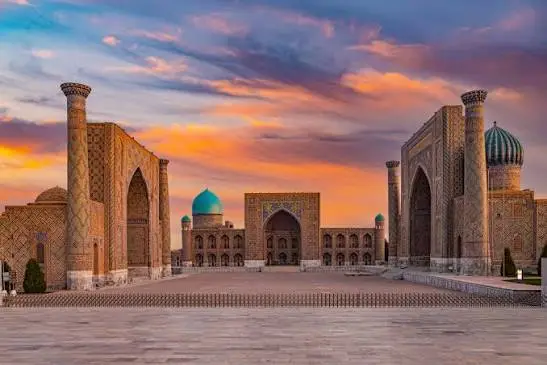
Many of the most famous monuments, such as the Registan madrasahs, are now museums with no special dress code beyond modesty. Active mosques and shrines, such as Khast Imam, Bahauddin Naqshband and the Imam al-Bukhari complex, require:
- Women: headscarf, long sleeves, long skirt or trousers.
- Men: long trousers and sleeves.
- Everyone: remove shoes where carpets are laid.
Some shrines lend scarves or wraps, but it is easier to bring your own. See Uzbekistan for Muslim travellers.
Tashkent versus the old towns and villages
- Tashkent: relaxed, cosmopolitan; dress as in a European city, though modesty is still appreciated in the old city and near mosques.
- Samarkand, Bukhara and Khiva: tourist areas are used to visitors, but modest dress is appreciated, especially in residential lanes and near religious sites.
- Fergana Valley and villages: the most conservative; long sleeves, long skirts or trousers, and a scarf for women.
- Mountains and desert: practical outdoor clothing; modesty matters less, but in villages keep covered.
Dressing for the seasons
Uzbekistan has a continental climate with big differences between day and night.
- Spring (March–May): light layers, a warm sweater or fleece for evenings, a light rain jacket.
- Summer (June–August): very light, loose, long clothing to protect from the sun, wide hat, sunglasses; temperatures can exceed 40 °C.
- Autumn (September–November): light clothes for the day, a jacket for evenings; warm layers in November.
- Winter (December–February): warm coat, hat, gloves and thermal layers; Khiva and Nukus are freezing.
For desert camps, bring warm clothes even in summer: nights are cold. See when to go and the month guides such as Uzbekistan in April and Uzbekistan in October.
Shoes
You will walk a lot on cobbles, uneven paving and steps, and climb walls and minarets. Bring:
- Comfortable walking shoes or trainers with good grip.
- Sandals that are easy to remove for mosques and homes, useful in summer.
- Hiking boots if you plan treks in the mountains or the Ustyurt Plateau.
Shoes are removed when entering homes and some guesthouse rooms; slip-ons are convenient.
Weddings and special occasions
If you are invited to a wedding or a family celebration, dress smartly: a shirt and trousers for men, a dress or smart outfit for women, covering shoulders and knees. Uzbeks dress up for these occasions, often in bright colours and atlas silk. See Uzbek wedding traditions.
What not to worry about
You do not need to buy special clothes, wear a headscarf all the time, or dress like a local. Uzbeks are welcoming and understanding towards visitors. If you want to dress like a local, an ikat dress, scarf or jacket from Margilan or Bukhara makes a beautiful souvenir; see Uzbek ikat silk. For a full list, see our packing list for Central Asia.
A sample packing list
For a 10-day trip in spring or autumn:
- 3–4 light shirts or blouses with sleeves
- 2 pairs of light trousers or long skirts
- 1 warm sweater or fleece and 1 light jacket
- 1 light scarf or shawl
- Comfortable walking shoes and sandals
- Sun hat, sunglasses and sunscreen
- A smart outfit for a dinner or a wedding invitation
- Warm layers if you plan a night in a yurt camp
Laundry services are available in most hotels and guesthouses, so you can pack light.
Local style and what people wear
In Tashkent, young people dress in international fashion. In the old towns and villages, many women wear long dresses, often in bright atlas silk, and headscarves; older men may wear the traditional chapan robe and doppi skullcap, especially at celebrations. You will see a mix of tradition and modernity everywhere. Visitors are not expected to dress like locals, but modest, neat clothing is always appreciated.
Clothing for desert and mountain trips
For the desert, a yurt camp or the desert fortresses, bring a wide hat, sunglasses, a scarf to protect your face from wind and dust, light long sleeves for the day and warm layers for the night. For the mountains near Tashkent, bring hiking shoes, a fleece and a waterproof jacket, as the weather changes quickly. For the Aral Sea and the Ustyurt Plateau, pack as for camping, with warm clothes for cold nights even in late spring and early autumn, plus a torch and a windproof jacket.
Buying clothes locally
If you forget something, bazaars and shops in every city sell inexpensive clothes, scarves, hats and shoes. Ikat and suzani clothing from local designers also make stylish, practical additions to your wardrobe, and a lovely reminder of your trip once you are home.
Frequently asked questions
Do women need to cover their hair in Uzbekistan?
Not in general, only in active mosques and shrines. Carry a scarf.
Can I wear shorts in Uzbekistan?
In Tashkent and tourist areas in hot weather, knee-length shorts are acceptable; avoid them in villages, mosques and shrines.
What shoes should I bring to Uzbekistan?
Comfortable walking shoes with good grip for cobbles, and sandals that are easy to remove.