Bukhara · Culture & etiquette
Shopping in Bukhara: gold embroidery, carpets, knives and more
What to buy in Bukhara, from gold embroidery, suzani and carpets to forged knives, stork scissors, puppets and ceramics, where to find them, how to bargain and take them home.
Bukhara is the best shopping city in Uzbekistan. Look for gold embroidery, suzani, carpets, forged knives and stork-shaped scissors, puppets, miniatures and Gijduvan ceramics. Shop in the trading domes, the madrasah workshops and the bazaar. Bargaining is normal; keep receipts and ask for export documents for anything old.
Gold embroidery
Zardozi, embroidery with gold and silver thread on velvet or silk, is Bukhara’s most prestigious craft. In the time of the emirs it decorated the robes, skullcaps, shoes and horse trappings of the court; the most precious work was reserved for the emir and his officials. The craft survived in Soviet factories and now thrives again in workshops and shops around the old city. You can buy embroidered skullcaps, bags, belts, cushions and panels. Prices depend on the density of the work and whether real metallic thread is used. In some workshops you can watch embroiderers at work.
Textiles and carpets
Suzani embroidered hangings and bedspreads are sold everywhere in Bukhara, in a wide range of styles and qualities. Bukhara suzani often have delicate floral designs; look at the back to judge hand embroidery. Ikat silk and cotton fabrics, scarves and robes come mainly from the Fergana Valley but are widely available.
Carpets: “Bukhara” is a famous name in the carpet trade, though it historically refers mainly to Turkmen carpets traded through the city’s markets, with their deep red colours and repeated gul motifs. Workshops in Bukhara weave carpets in Turkmen, Uzbek and Persian designs, in wool and silk. A good dealer explains the materials, dyes and knot density and provides export documents.
Metalwork, knives and scissors
Bukhara’s blacksmiths forge knives, scissors and tools by hand. The most famous souvenir is a pair of scissors shaped like a stork, its long beak forming the blades, a design associated with Bukhara for generations. Forges near the trading domes let you watch the smiths at work. Knives with decorated blades and horn handles make good gifts but must go in checked luggage.
Engraved copper and brass, such as trays, jugs and bowls, are also made and sold in the old city.
Crafts and art
- Puppets: Bukhara has a tradition of hand-carved and painted wooden puppets, representing characters from folk tales and everyday life. Some workshops also stage small puppet shows.
- Miniatures: painters produce miniatures in the Persian tradition on paper, lacquered boxes and leather.
- Ceramics: brown, green and yellow pottery from nearby Gijduvan and blue pottery from Rishtan in the Fergana Valley.
- Woodcarving: carved boxes, chess sets and Quran stands.
- Karakul: Bukhara was the centre of the trade in karakul lambskin; hats and garments are still sold.
Where to shop
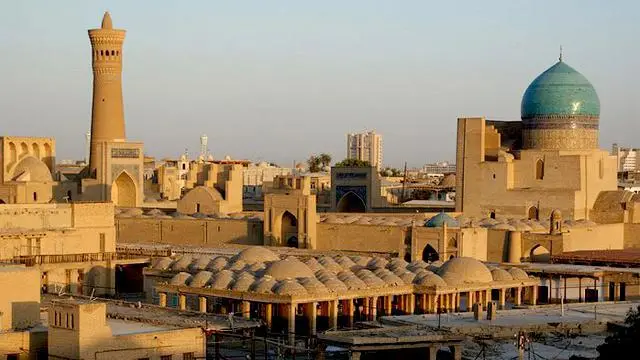
- The trading domes: the 16th-century trading domes and the Tim of Abdullah Khan are full of shops selling textiles, carpets, jewellery, ceramics and souvenirs.
- Madrasah workshops: many madrasahs, such as the Abdulaziz Khan, Nadir Divan-Begi and Kukeldash, have craftspeople working and selling in the former student cells.
- Forges and workshops in the lanes near the domes for knives, scissors and metalwork.
- The Kolkhoz bazaar near the Ark for spices, dried fruit, nuts, sweets and everyday goods at local prices.
- Gijduvan for ceramics direct from the potters.
Bargaining and paying
Bargaining is expected in markets and most craft shops. Ask the price, offer less and settle in the middle with good humour; walking away politely is part of the game. Prices in the busiest tourist spots start high, so look around before buying. Cash in Uzbek soum is easiest; larger shops accept cards and some quote prices in US dollars for carpets and expensive textiles. Ask for a receipt for significant purchases.
Taking purchases home
Uzbekistan restricts the export of antiques and cultural property. Old carpets, suzani, jewellery, coins, manuscripts and anything that looks old may need an export certificate. Reputable shops can arrange the documents or give you paperwork showing that an item is new. Keep all receipts; without documents, items may be confiscated at customs. Knives and scissors must go in checked baggage. See our Uzbekistan visa and entry guide for general entry rules, and compare with shopping in Samarkand.
Buying responsibly
Buy directly from makers when you can: the money goes to the families who keep these crafts alive. Ask who made a piece and how; most craftspeople are glad to explain. Be cautious with items sold as antiques without documents, and avoid products made from protected species.
Frequently asked questions
What should I buy in Bukhara?
Gold embroidery, suzani, carpets, forged knives and stork-shaped scissors, puppets, miniatures and Gijduvan ceramics.
Where is the best place to shop in Bukhara?
The trading domes and the craft workshops in the madrasahs of the old city, plus the Kolkhoz bazaar for food and spices.
Can I take a knife home from Bukhara?
Yes, in checked luggage only. Check the rules of your airline and your home country.
Rules, timetables and prices change. We check this page regularly, but always confirm entry requirements with official sources before you travel.