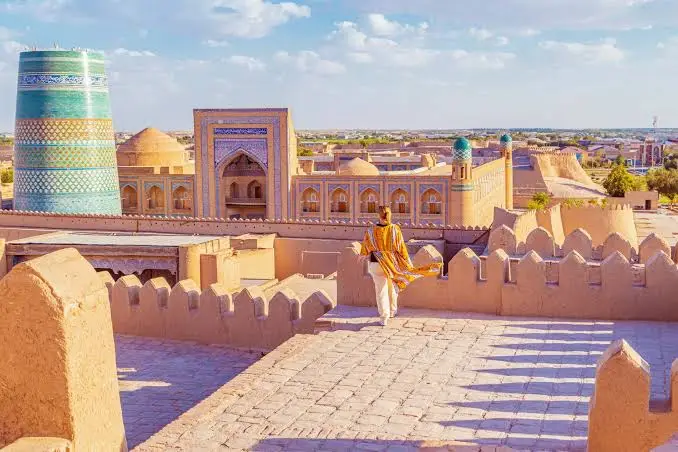
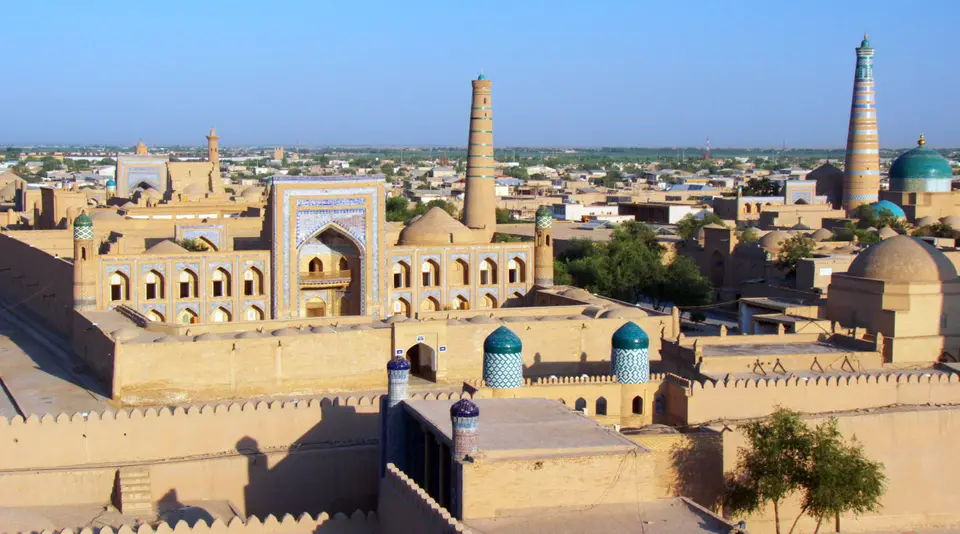
Khiva · Culture & etiquette
Shopping in Khiva: woodcarving, fur hats, carpets and more
What to buy in Khiva, from carved wood and big fur hats to silk carpets, suzani, ceramics and knives, where to find them in Ichan-Kala, how to bargain and take them home.
The best souvenirs from Khiva are carved woodwork, the tall shaggy fur hats of Khorezm, silk carpets and suzani from local workshops, ceramics, puppets and knives. Shop in the madrasah cells, along the streets of Ichan-Kala and in the bazaar outside the east gate. Bargain politely and keep receipts for anything that looks old.
Woodcarving
Khiva is the capital of woodcarving in Central Asia. Its craftsmen made the carved doors and columns that fill the city, from the Juma mosque to the Tash-Hauli palace. Today workshops in Ichan-Kala make carved boxes, folding Quran stands (lauh) cut from a single piece of wood, chess sets, trays, panels, and even full-size doors, which can be shipped. Watching a carver at work, tapping a pattern into walnut or elm with chisels and mallet, is one of the pleasures of Khiva.
Look for crisp, deep carving and well-finished joints. A small folding stand or box is easy to carry and makes an excellent gift.
Fur hats
The big, shaggy chugurma, a tall hat of sheepskin with long curly wool, is the traditional headdress of the men of Khorezm, and it is the most photographed souvenir in Khiva. Stalls near the west gate and along the main street sell them in black, white and brown, in many sizes, along with smaller karakul hats. They are surprisingly light and warm. Many visitors buy one for the photo; they are genuinely worn in winter.
Carpets and embroidery
Several workshops in Ichan-Kala weave silk carpets by hand, using natural dyes and designs inspired by the tiles, doors and manuscripts of Khiva. At least one was set up with international support to revive the craft and train young weavers, and visitors can watch the process from dyeing and spinning to knotting. Carpets are a significant purchase: ask about materials, knot density and dyes, and how long a piece took to make.
Suzani embroidery is also made in Khiva, with designs taken from the tilework of the city, as well as embroidered cushion covers, bags and hangings. Prices depend on size and whether the work is by hand.
Ceramics, puppets and more
- Ceramics: Khorezm has its own pottery tradition, with blue, white and turquoise glazes echoing the tiles of the city, alongside pieces from Rishtan and Gijduvan.
- Puppets and dolls in traditional dress.
- Knives with decorated blades and handles.
- Musical instruments, such as the dutar, the long-necked two-stringed lute, and the Khorezmian doira frame drum.
- Miniatures and painted boxes.
- Textiles: ikat scarves, robes and fabric.
- Edible gifts: dried melon, dried apricots, nuts and spices from the bazaar.
Where to shop
- Madrasah cells: many madrasahs in Ichan-Kala, including the Allakuli Khan and Kutlug Murad Inak madrasahs, house craft shops and workshops.
- The main street between the west and east gates is lined with stalls and shops.
- The covered market and caravanserai by the east gate.
- Workshops for woodcarving, carpets and suzani, where you can watch and buy from the makers.
- The bazaar outside the Palvan Darvaza, for food, spices, fur hats and everyday goods at local prices. See Dishan-Kala.
Buying responsibly
Many of the crafts you see in Khiva almost disappeared in the 20th century. Woodcarving, silk carpet weaving and natural dyeing were revived from the 1990s onwards, often by a handful of masters who trained apprentices. Buying directly from workshops helps keep these skills alive and puts more money in the hands of the people who make the objects. Ask who made a piece, how long it took and where the materials come from; most artisans are happy to explain. Be wary of mass-produced items sold as handmade, and of anything offered as an antique without documents.
Bargaining and paying
Bargaining is normal at stalls and in most craft shops. Ask the price, offer less, and settle in the middle with a smile; it is fine to walk away politely. Workshops with fixed prices are less flexible. Cash in Uzbek soum is easiest; larger shops and carpet workshops may accept cards or quote in US dollars. Ask for a receipt for anything significant.
Taking purchases home
Uzbekistan restricts the export of antiques and cultural property. Old carpets, suzani, carved woodwork, jewellery, coins and manuscripts may require an export certificate. Reputable shops provide documents showing an item is new, or arrange the certificate. Keep receipts; without documents, items may be confiscated at customs. Knives must go in checked luggage. Large carpets and doors can often be shipped by the seller.
See also shopping in Bukhara and shopping in Samarkand, and our Uzbekistan visa and entry guide.
Frequently asked questions
What should I buy in Khiva?
Carved woodwork, especially folding Quran stands and boxes, a Khorezm fur hat, silk carpets, suzani, ceramics and dried melon from the bazaar.
Can I watch craftspeople at work in Khiva?
Yes. Woodcarvers, carpet weavers and embroiderers work in workshops across Ichan-Kala and welcome visitors.
Do I need documents to export a carpet from Uzbekistan?
For old items, yes. Ask the seller for documents showing the item is new or for an export certificate, and keep the receipt.
Rules, timetables and prices change. We check this page regularly, but always confirm entry requirements with official sources before you travel.