Muynak & the Aral Sea · Sights
Muynak ship cemetery
The ship cemetery of Muynak, where fishing boats lie stranded on the dry bed of the Aral Sea far from the water, the story of the sea’s disappearance, the Aral Sea museum and memorial, and how to visit from Nukus.
At Muynak, once a busy fishing port on the Aral Sea, rusting ships lie on sand where the sea used to be. The water has retreated more than 100 km since the 1960s, after the rivers feeding it were diverted for cotton irrigation. The town has a museum and a memorial overlooking the old seabed. It is about 3 hours from Nukus.
A port without a sea
Until the 1960s, Muynak stood on a peninsula on the southern shore of the Aral Sea, then the fourth-largest lake in the world. It was a thriving town with a fish cannery, a fleet of fishing boats and ships that carried passengers and cargo across the sea. Thousands of people worked in fishing and fish processing.
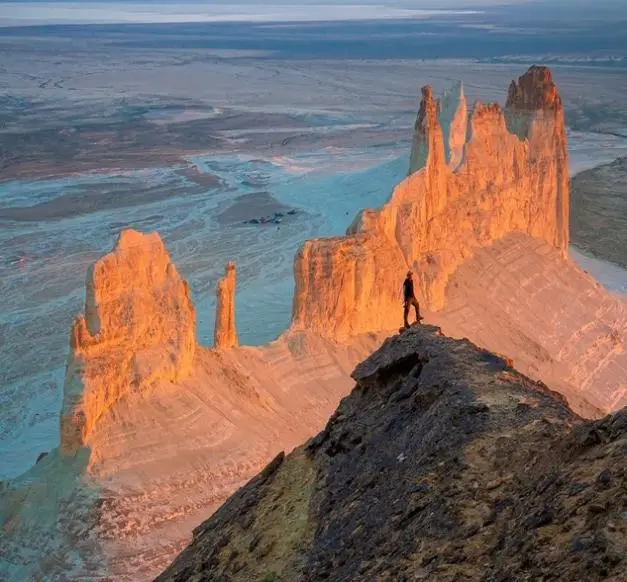
Today the town stands in a desert. The shoreline has moved more than 100 km away, and the boats that once fished here lie stranded on the sand below the town, rusting in the wind. The ship cemetery has become one of the best-known symbols of environmental disaster anywhere in the world.
Why the Aral Sea disappeared
The Aral Sea was fed by two great rivers, the Amu Darya and the Syr Darya. From the 1960s, the Soviet Union greatly expanded irrigation in Central Asia, especially for cotton, taking huge amounts of water from both rivers. Less and less water reached the sea, which began to shrink rapidly.
By the 1980s the fishing industry had collapsed. The sea split into separate parts; the southern part, on the Uzbek side, has largely dried up, leaving a new desert, the Aralkum, of salty sand. Dust storms carry salt and pesticide residues across the region, and the local climate has become harsher, with hotter summers and colder winters. The people of Karakalpakstan have suffered serious health and economic consequences.
The ships
The boats lie on the sand beneath the Aral Sea memorial, a monument on the cliff edge that marks where the shoreline once was. Most are fishing trawlers of various sizes, many stripped of their metal over the years. Their number has decreased, as some were sold for scrap and others gathered in one place, but there are still a dozen or so to see, scattered on the old seabed.
You can walk down among them, touch the rusting hulls and imagine the water that once surrounded them. Camels sometimes graze nearby. The scene is haunting, especially in the evening light.
The museum and the memorial
In the town, the local museum of the history of the Aral Sea tells the story of Muynak in its prosperous days, with photographs of the port, the cannery and the fishing fleet, paintings and maps showing the shrinking sea. It helps to understand the scale of what was lost. At the memorial above the ship cemetery, information panels and a viewpoint look out over the dry seabed.
Muynak today
Muynak is a small, quiet town, and life is not easy. In recent years efforts have been made to support it: an airport has been rebuilt, and new projects aim to plant saxaul and other desert plants on the dry seabed to reduce dust storms. The town has also become known for the Stihia electronic music festival, held near the ship cemetery in some years, which brought new attention to the region.
Visiting
Location: about 200 km north of Nukus, roughly 3–3.5 hours by road via Kungrad.
Time needed: 1–2 hours for the ship cemetery, memorial and museum.
Tips: bring water, sun protection and a windproof jacket; it can be very windy. Be respectful when photographing local people. Walking among the ships is generally allowed, but take care around sharp, rusted metal.
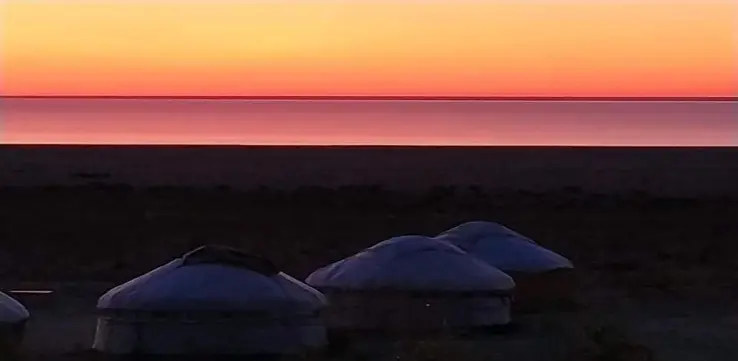
Muynak is usually visited either as a long day trip from Nukus or on the way to the remaining shore of the Aral Sea, which requires a 4x4 across the Ustyurt Plateau and a night in a yurt camp, often passing Sudochie Lake. See our Aral Sea and Karakalpakstan tour and things to do in Nukus.
Frequently asked questions
How far is the Aral Sea from Muynak today?
The shoreline has retreated more than 100 km from Muynak since the 1960s.
Are there still ships in Muynak?
Yes, about a dozen rusting fishing boats lie on the old seabed below the Aral Sea memorial.
How long is the drive from Nukus to Muynak?
About 200 km, roughly 3–3.5 hours by car.
Rules, timetables and prices change. We check this page regularly, but always confirm entry requirements with official sources before you travel.