Bukhara · Food
Bukhara food: dishes, sweets, tea and where to eat
What to eat in Bukhara, from plov and tandir-baked samsa to Bukharan Jewish dishes, sweets and spiced tea, how meals work and where to eat in the old city.
In Bukhara, eat plov at lunchtime, samsa and bread from the tandir, shashlik in the evening by Lyabi-Hauz, and try dishes of the Bukharan Jewish tradition such as green herb plov. Finish with halva, nut sweets and spiced tea. Teahouses, family restaurants in old houses and the bazaar are the best places to eat.
Plov, Bukhara style
Plov (osh) is the centrepiece of Uzbek cooking, and every region has its version. Bukhara’s plov is generally made with lamb or beef, yellow carrots and rice, cooked slowly in a cast-iron cauldron, sometimes with chickpeas, raisins or quince. Compared with the layered Samarkand plov or the richer Tashkent style, Bukhara’s is often described as lighter, with the grains of rice separate.
As everywhere in Uzbekistan, plov is a lunch dish. Plov houses cook in the morning and serve from late morning until it runs out, usually in the early afternoon. Eat it with a salad of tomato and onion, bread and green tea.
Bukharan Jewish cooking
Bukhara’s long-established Jewish community created its own cuisine, which now lives on mainly in the diaspora in Israel and New York but is still remembered in the city. Its best-known dish is bakhsh, a green plov of rice cooked with chopped herbs, especially coriander and dill, and meat or liver, traditionally steamed in a cloth bag inside a pot of boiling water. Other dishes include stuffed vegetables, slow-cooked Sabbath meals that simmer overnight, and fish dishes. A few restaurants and family homes in Bukhara prepare these dishes; ask locally, or arrange a home-cooked dinner.
Other dishes to try
- Samsa: pastries filled with lamb and onion, or pumpkin in autumn, baked on the walls of a tandir oven. Bakeries in the old city sell them hot in the morning.
- Shashlik: grilled skewers of lamb, beef, liver or minced meat, served with raw onion and bread. The district of Gijduvan, near Bukhara, has a reputation for its grilled meat.
- Shurpa: clear soup with meat and vegetables.
- Lagman: hand-pulled noodles with meat and vegetables, in broth or stir-fried.
- Manti: large steamed dumplings with meat and onion.
- Dimlama: meat and vegetables slow-steamed in their own juices.
- Non: round flat bread from the tandir, eaten at every meal.
Sweets and spiced tea
Bukhara has a long tradition of sweets. In the bazaar and around the trading domes you can buy halva of many kinds, crystallised sugar (navat), sugared nuts, parvarda (pulled-sugar sweets) and dried fruit. During Ramadan, look for nisholda, a white, airy cream of whipped egg whites, sugar and liquorice root, eaten with bread.
Tea is drunk all day, mostly green tea, poured into small bowls. Around the trading domes, some teahouses serve spiced tea with cinnamon, cloves, ginger and other spices, accompanied by sweets: a pleasant break from sightseeing. Remember the local custom: the host pours a little tea into the bowl, and a half-full bowl is a sign of respect and an invitation to stay.
Where and how to eat
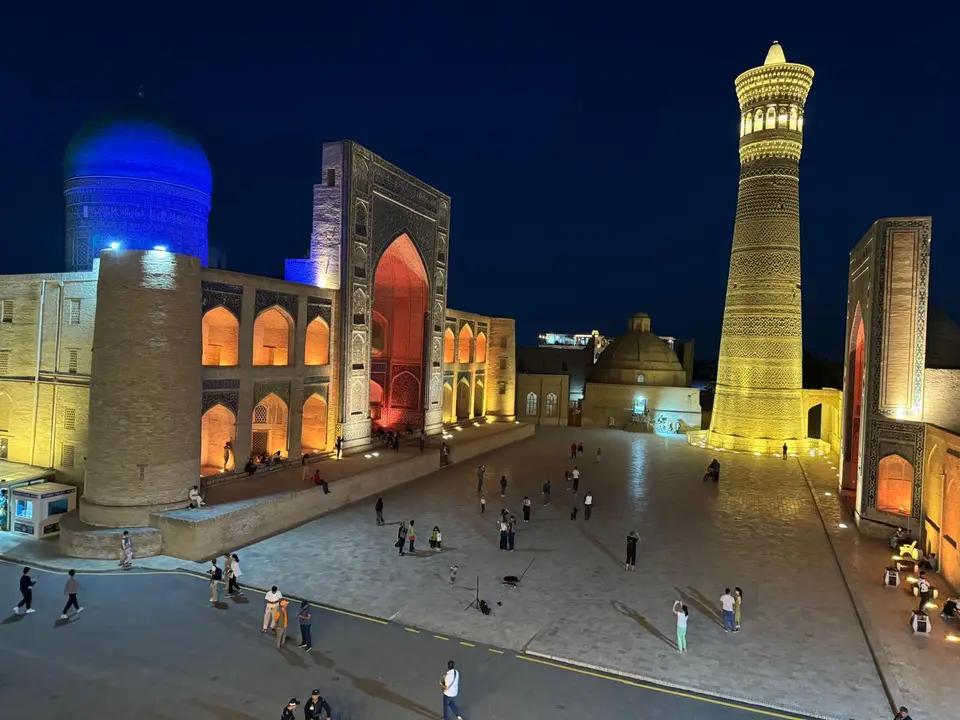
Lyabi-Hauz. The teahouses and restaurants around the pool are the most atmospheric place to eat in the evening, with tables under the trees by the water. They are convenient but busy, and prices are higher than elsewhere.
Restaurants in old houses and madrasahs. Several restaurants occupy restored merchants’ houses, caravanserais or madrasah courtyards, serving Uzbek and European dishes in beautiful surroundings, sometimes with music or folk shows in the season.
Chaikhanas and plov houses. For a local lunch, look for simple teahouses where people sit on raised platforms (tapchan) around a low table.
The bazaar. The central Kolkhoz bazaar near the Ark is the place to buy fruit, nuts, dried fruit, bread and spices, and to try snacks such as samsa.
Many restaurants add a service charge of around 10–15%. Alcohol is served in many restaurants catering to visitors, but not in all traditional teahouses.
Vegetarian and dietary tips
Uzbek cuisine is meat-heavy, and many dishes use meat stock, but vegetarians can eat well with some effort. Order salads, vegetable soups, bread with yoghurt, eggs, pumpkin samsa, vegetable manti and the abundant fruit and nuts. Say go’shtsiz (“without meat”) and explain that you avoid meat stock. Halal food is the norm. If you have allergies, a note in Russian or Uzbek is helpful; see our Uzbek phrases.
Food experiences
Join a plov cooking class with a local family, visit a bakery to watch bread being slapped onto the walls of the tandir, take a guided bazaar walk with tastings, or arrange a home dinner, perhaps with Bukharan Jewish dishes. Ask us to include any of these in your trip. For a wider introduction, see the food of Central Asia and our guide to Samarkand food.
Frequently asked questions
What food is Bukhara famous for?
Plov at lunchtime, tandir samsa and bread, sweets like halva and nisholda, spiced tea and Bukharan Jewish dishes such as green herb plov (bakhsh).
Where is the best place to eat in Bukhara?
For atmosphere, the restaurants around Lyabi-Hauz in the evening; for local food, simple teahouses and plov houses at lunchtime.
Is Bukhara good for vegetarians?
It takes planning, as many dishes contain meat or meat stock, but salads, bread, pumpkin samsa, vegetable dishes, fruit and nuts are widely available.
Rules, timetables and prices change. We check this page regularly, but always confirm entry requirements with official sources before you travel.