Khiva · Sights
Sayid Alauddin Mausoleum, Khiva
The small 14th-century mausoleum of the Sufi sheikh Sayid Alauddin, one of the oldest buildings in Khiva, with its majolica tombstone, its link to Timur’s teacher and its pilgrims.
The Sayid Alauddin mausoleum is a small, modest shrine in the centre of Ichan-Kala and among the oldest surviving buildings in Khiva, dating from the 14th century. It holds the tomb of Sayid Alauddin, a Sufi sheikh, under a fine glazed tombstone. Set below the level of today’s street, it is quiet and atmospheric. Allow 10–15 minutes.
The sheikh
Sayid Alauddin was a Sufi sheikh who lived in Khorezm in the late 13th and early 14th centuries and died around 1303. Little is known about his life, but he was revered as a holy man, and his tomb became a place of pilgrimage. According to tradition, one of his disciples was Amir Kulal, a Sufi master of Bukhara who in turn is remembered as a spiritual guide of the young Timur. This chain of teachers links the small shrine in Khiva to the great history of Central Asia.
Khorezm in his time was recovering from the Mongol conquest of the 1220s. Under the Golden Horde, which controlled the region in the 14th century, Urgench, the capital, revived for a while as a rich trading city. Khiva was then a smaller town, and few buildings survive from that period, which makes this mausoleum precious.
The building
The mausoleum has two rooms: a domed ziyaratkhana, or room for pilgrims to pray, and the gurkhana, the burial chamber, with the tomb. The building dates in its present form mainly from the 14th century, with later repairs, including work in the early 19th century. Because the ground level of the city has risen over the centuries, the mausoleum stands somewhat lower than the street; you step down to enter, as at many old buildings in Central Asia.
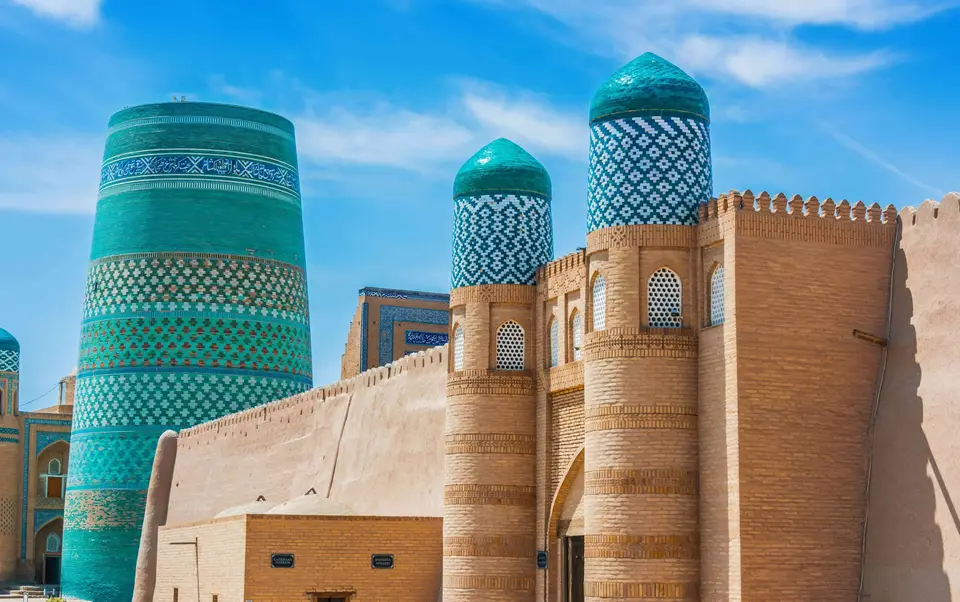
The highlight is the tombstone, a raised tomb covered with glazed majolica tiles in relief, decorated with floral and geometric patterns and inscriptions in blue, white and turquoise. It is considered a fine example of 14th-century Khorezmian ceramics, from a period when glazed relief tiles were made in Urgench and other cities of the region. Look closely at the moulded patterns: they show the high quality of Khorezmian tile making long before the brilliant majolica of the 19th-century khans that covers Kalta Minor and Tash-Hauli.
A living shrine
The mausoleum is still visited by pilgrims, who come to pray, read verses from the Quran and ask for blessings. Often an elderly guardian or imam sits in the pilgrims’ room and recites prayers for visitors, Muslim or not, who wish to receive a blessing; a small donation is customary afterwards. Even if you do not take part, the quiet atmosphere is a contrast to the busy main street outside.
Old Khiva and new Khiva
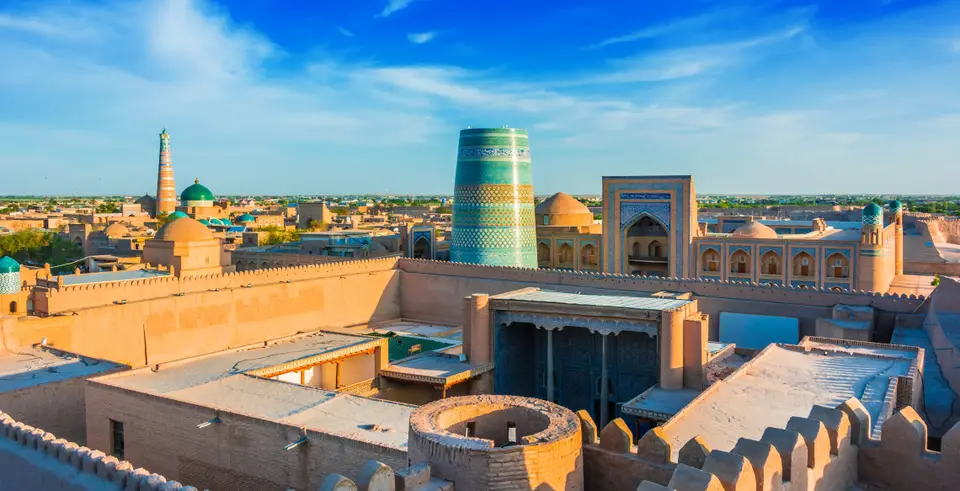
Most of what visitors see in Ichan-Kala dates from the 18th and especially the 19th century, when the khans of the Kungrad dynasty rebuilt the city. Only a handful of structures are older: parts of the walls, the reused wooden columns of the Juma mosque, the tomb of Pahlavan Mahmud in its earlier form, and this mausoleum. Visiting it gives a sense of the deeper history of Khiva, which according to legend was founded around a well dug by Shem, son of Noah, and which archaeologists date back more than two thousand years.
Visiting
Location: in the centre of Ichan-Kala, just south of the main street, close to the Pahlavan Mahmud mausoleum and the Islam Khoja minaret.
Tickets: usually free or included in the Ichan-Kala ticket; donations are welcome.
Time needed: 10–15 minutes.
Etiquette: dress modestly, remove your shoes if asked, and keep your voice low. Ask before photographing pilgrims or the guardian.
Tips: combine with the Pahlavan Mahmud mausoleum and the Shirgazi Khan madrasah in the south of the old city. See our Khiva itinerary.
Frequently asked questions
How old is the Sayid Alauddin mausoleum?
It dates mainly from the 14th century, making it one of the oldest surviving buildings in Ichan-Kala.
Who was Sayid Alauddin?
A Sufi sheikh of Khorezm who died around 1303. Tradition links him, through his disciple Amir Kulal, to the spiritual teachers of Timur.
What is special about the mausoleum?
Its glazed relief tombstone, a fine example of 14th-century Khorezmian ceramics, and its quiet, living atmosphere as a shrine.
Rules, timetables and prices change. We check this page regularly, but always confirm entry requirements with official sources before you travel.