Tashkent · Food
Tashkent food: what to eat and where
What to eat in Tashkent, from wedding-style plov and naryn to samsa, Korean salads and bazaar snacks, how meals work, and where to find good food in the capital.
In Tashkent, eat plov at lunchtime, cooked in giant cauldrons, often with chickpeas, raisins and horse-meat sausage. Try naryn, cold noodles with horse meat, samsa from the tandir, shashlik and the city’s Korean-Uzbek salads and noodles. Snack your way through Chorsu bazaar, and enjoy the capital’s wide choice of restaurants and cafés.
Tashkent plov
Plov (osh) is the king of Uzbek cuisine, and Tashkent has its own style. The city is famous for wedding plov (to’y oshi), traditionally cooked for hundreds of guests at weddings and family celebrations, early in the morning. It is made with lamb or beef, yellow carrots, rice, often chickpeas and raisins, and served with slices of kazy, a rich horse-meat sausage, and sometimes quail eggs.
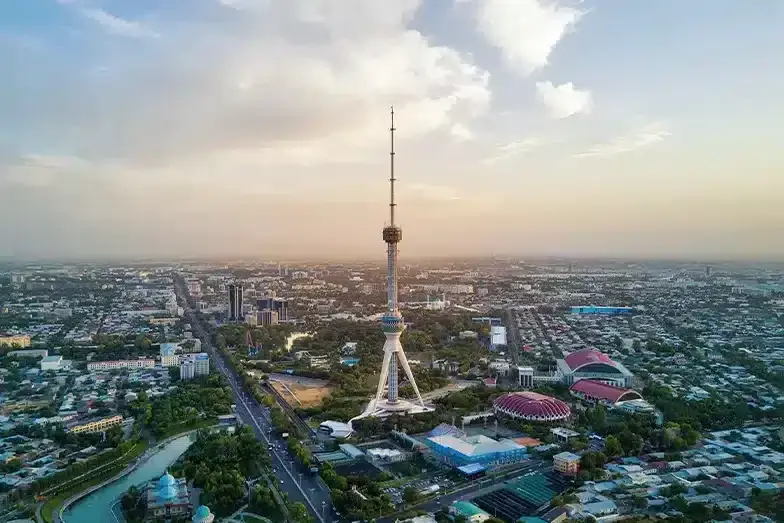
Plov is a lunch dish. In Tashkent, specialised plov houses cook dozens of cauldrons from early morning and serve until early afternoon. The best known is a large plov centre near the TV tower, where you can watch cooks stir rice in enormous cauldrons over wood fires. Many local teahouses serve excellent plov too. Eat it with a salad of tomato and onion (achichuk), bread and green tea.
Tashkent specialities
- Naryn: a Tashkent speciality of thin, hand-cut cold noodles mixed with finely sliced boiled horse meat, served with a little broth. Often eaten in the morning or at celebrations.
- Halim: a thick porridge of wheat and meat, cooked overnight and eaten for breakfast in winter.
- Sumalak: a sweet brown paste of sprouted wheat, cooked for a whole night in large cauldrons for Navruz in March.
- Kazy: horse-meat sausage, sliced and served with plov or as a cold starter.
- Tandir gosht: lamb slow-cooked in a sealed tandir oven.
Everyday favourites
- Samsa: pastries filled with meat and onion, pumpkin or potato, baked in a tandir; Tashkent is full of samsa bakeries.
- Shashlik: grilled skewers of lamb, beef, chicken, liver or minced meat, served with onions and bread.
- Lagman: hand-pulled noodles with meat and vegetables, in a soup or fried.
- Manti: steamed dumplings with meat and onion.
- Shurpa: clear meat and vegetable soup.
- Non: the round flat bread from the tandir, eaten at every meal.
Korean-Uzbek and international food
Tashkent has a large Korean community, descended from Koreans deported from the Russian Far East in 1937. Their cooking has become part of everyday Tashkent food: spicy carrot salad (morkovcha), cold noodle soup (kuksi), and many pickled salads sold in the bazaars. Try them at Chorsu or in Korean cafés.
As the capital, Tashkent also has the widest choice of restaurants in Uzbekistan: Russian, Georgian, Turkish, Italian, Japanese and modern Uzbek cuisine, as well as a growing café and coffee culture, especially in the centre and around Tashkent City.
Bazaars
Bazaars are the best places to understand Tashkent’s food. At Chorsu bazaar, under the great blue dome, you can taste dried fruit, nuts, halva, kurt (salty dried yoghurt balls) and spices, and buy bread, fresh fruit and vegetables. Food stalls and canteens around the bazaar serve samsa, plov and shashlik. Other markets, such as the Alay bazaar in the centre, are good for fruit and dried fruit.
How and where to eat
Chaikhanas (teahouses) serve simple Uzbek food at low prices, often at tables or on raised platforms. Plov houses open only at lunchtime. Restaurants range from traditional Uzbek places with live music, popular for family celebrations, to modern restaurants with international menus. Many restaurants add a service charge of around 10–15%; check the bill before tipping extra. Alcohol is widely available in restaurants in the capital.
Meal times: breakfast is often bread, tea, eggs and dairy; lunch is the main meal for plov; dinner is often shashlik or a restaurant meal. Green tea is drunk throughout the day.
Tea and drinks
Green tea is the everyday drink, served in small bowls; black tea is common too, especially with milk in the north. In summer, look for ayran, a cool salted yoghurt drink, and fresh fruit juices. Uzbekistan produces its own wines, mainly from the Samarkand and Tashkent regions, as well as beer and brandy, all available in restaurants and shops in the capital.
Vegetarian and dietary tips
Tashkent is the easiest city in Uzbekistan for vegetarians, with international restaurants and cafés offering meat-free dishes. In traditional places, look for salads, vegetable soups, pumpkin samsa, vegetable manti and dairy dishes, and ask for dishes go’shtsiz (without meat), noting that meat stock is common. See our Uzbek phrases and the food of Central Asia. Compare with Samarkand food and Bukhara food.
Frequently asked questions
What food is Tashkent famous for?
Wedding-style plov with chickpeas, raisins and horse-meat sausage, naryn noodles with horse meat, samsa and Korean-Uzbek salads.
Where can I eat the best plov in Tashkent?
In plov houses at lunchtime, including the large plov centre near the TV tower, where plov is cooked in giant cauldrons.
Is Tashkent good for vegetarians?
It is the easiest city in Uzbekistan for vegetarians, thanks to its international restaurants and cafés.
Rules, timetables and prices change. We check this page regularly, but always confirm entry requirements with official sources before you travel.