Blog · off the beaten track, Planning
Uzbekistan’s hidden gems: 12 places beyond Samarkand, Bukhara and Khiva
Twelve lesser-known places in Uzbekistan for travellers who want to go beyond the classic Silk Road cities, from the Savitsky Museum and the desert fortresses to Nuratau villages, Termez’s Buddhist ruins, the Fergana Valley, Boysun and the Ustyurt Plateau.
Beyond Samarkand, Bukhara and Khiva, Uzbekistan’s hidden gems include the Savitsky Museum in Nukus, the desert fortresses of Khorezm, the Nuratau mountain villages, Termez and its Buddhist ruins, the crafts of the Fergana Valley, the mountains of Boysun, the Sarmishsay petroglyphs and the Ustyurt cliffs above the Aral Sea.
Why go beyond the classics?
Samarkand, Bukhara and Khiva deserve their fame, but Uzbekistan has much more: deserts, mountains, ancient ruins, village life and extraordinary museums, often with few other visitors. If this is your second trip, or you have more than a week, these places will show you a different side of the country.
1. The Savitsky Museum, Nukus
In the remote capital of Karakalpakstan, the Savitsky Museum holds one of the world’s great collections of Russian and Uzbek avant-garde art, saved from Soviet censorship by Igor Savitsky. It is often called the "Louvre of the desert". See things to do in Nukus.
2. The desert fortresses of Khorezm
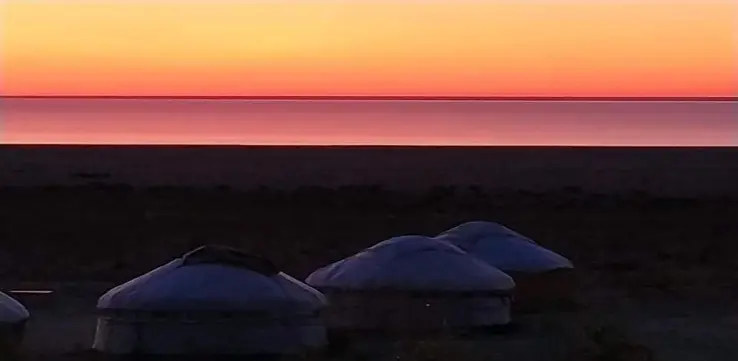
North of Khiva, the ruined mud-brick castles of ancient Khorezm, Toprak Kala, Ayaz Kala, Kyzyl Kala and Big Guldursun, stand in the Kyzylkum desert. Spend a night in the yurt camp at Ayaz Kala.
3. Muynak and the Aral Sea
The rusting ships of the Muynak ship cemetery, on the dry bed of the Aral Sea, are a haunting reminder of an environmental disaster. Continue by 4x4 to the remaining sea. See the Aral Sea disaster explained.
4. The Ustyurt Plateau
A vast stony desert ending in white cliffs above the Aral Sea, one of the wildest landscapes in Central Asia, reached only by 4x4. See Ustyurt Plateau.
5. The Nuratau mountains and village homestays
6. Sarmishsay petroglyphs
Near Navoi, a gorge holds thousands of rock carvings spanning thousands of years: wild bulls, goats, hunters and mysterious figures. See Sarmishsay petroglyphs.
7. Termez and Buddhist Uzbekistan
In the far south, Termez was a centre of Buddhism under the Kushans. See the monastery of Fayaz Tepa, the Zurmala stupa, the Archaeological Museum and the shrines of al-Hakim at-Termizi and Sultan Saodat. See things to do in Termez.
8. Boysun
In the mountains between Shakhrisabz and Termez, the region of Boysun preserves ancient traditions, rituals and crafts, recognised by UNESCO as intangible cultural heritage, along with gorges and caves. Its spring folklore festival, Boysun Bahori, is held in some years.
9. The Fergana Valley
Green, fertile and densely populated, the Fergana Valley is the land of crafts: ikat silk in Margilan, ceramics in Rishtan, and the palace of the khans in Kokand. See our Fergana Valley itinerary.
10. Shakhrisabz and the Takhtakaracha pass
Timur’s birthplace, reached over a scenic mountain pass from Samarkand, with the colossal ruins of the Ak-Saray palace.
11. Rabati Malik and the caravan road
On the road between Samarkand and Bukhara, the portal of an 11th-century royal caravanserai and its domed cistern recall the caravans of the Silk Road. See Rabati Malik.
12. Ugam-Chatkal National Park
Just outside Tashkent, the western Tian Shan offers peaks, valleys, walnut forests and wildlife, part of a UNESCO World Heritage site. Hike to Big Chimgan or explore the valleys. See Ugam-Chatkal National Park.
How to include them
- From Khiva: the desert fortresses (1 day), Nukus and Muynak (2–4 days).
- Between Samarkand and Bukhara: Nuratau, Aydarkul, Sarmishsay and Rabati Malik (1–2 days).
- From Samarkand south: Shakhrisabz, Boysun and Termez (2–4 days).
- From Tashkent: the Fergana Valley (2–3 days) and the mountains (1 day).
See our 14-day itinerary and Silk Road cities compared. Our team in Khiva can help you build a route off the beaten track.
When to go to the hidden gems
Seasons matter more off the beaten track than in the cities. Karakalpakstan, the Aral Sea and the Ustyurt Plateau are best from late April to early June and from September to early October; yurt camps on the Aral shore close in winter, and summer heat on the plateau is extreme. The Nuratau villages and Lake Aydarkul are lovely from April to October, with swimming in summer and blossom in spring. Termez and Boysun are best in spring and autumn, as summer in the south is the hottest in the country, while the mountains around Boysun can be snowy in winter. The Fergana Valley is pleasant almost all year, at its most beautiful in April–May and in October, when the harvest fills the bazaars. The mountains near Tashkent are best for hiking from June to September and for skiing from December to March.
Practical tips for remote areas
- Transport: many of these places have no public transport; a car with an experienced local driver is the best way to reach them, and a 4x4 is essential for the Aral Sea and the Ustyurt.
- Accommodation: expect simpler hotels, guesthouses, homestays and yurt camps; book in advance in high season, as capacity is small.
- Money: ATMs are rare outside the cities; carry enough cash in som.
- Connectivity: mobile signal can be weak or absent in the desert and mountains; download offline maps.
- Permits: some border areas, such as the upper Pskem valley near Tashkent, need permits; ask before you plan.
- Guides: a local guide makes a huge difference at archaeological sites and in villages, explaining what you see and translating.
Combining hidden gems with the classics
You do not have to choose between the famous cities and the lesser-known places. A two-week route can include Tashkent, the Fergana Valley, Samarkand, a night in the Nuratau mountains and a yurt camp, Bukhara, Khiva and the desert fortresses, with Nukus and the Aral Sea as an option. Each hidden gem adds a different side of Uzbekistan: village hospitality, desert silence, ancient religions or Soviet-era art. See our 14-day itinerary, desert yurt camp guide and the Aral Sea explained.
Responsible travel off the beaten track
Remote places are fragile. Stay on paths at archaeological sites, never take pottery or stones, keep campfires to designated places, and carry your rubbish out of the desert and mountains. In villages, ask before photographing people, dress modestly and use local guesthouses and guides, so that tourism benefits the communities you visit.
How to start
If you are unsure where to begin, add one hidden gem to a classic route: a day at the desert fortresses from Khiva, a night in the Nuratau mountains between Samarkand and Bukhara, or a trip to the mountains from Tashkent. Each adds only a day or two, but gives a very different view of Uzbekistan.
Frequently asked questions
What are the hidden gems of Uzbekistan?
Places such as the Savitsky Museum, the desert fortresses, Nuratau villages, Termez, Boysun, the Fergana Valley and the Ustyurt Plateau.
Where can I go off the beaten track in Uzbekistan?
Karakalpakstan, the Nuratau mountains, the south around Termez and Boysun, and the mountains near Tashkent.
How many days do I need to see hidden gems in Uzbekistan?
Add 2–5 days to a classic route, depending on which regions you choose.